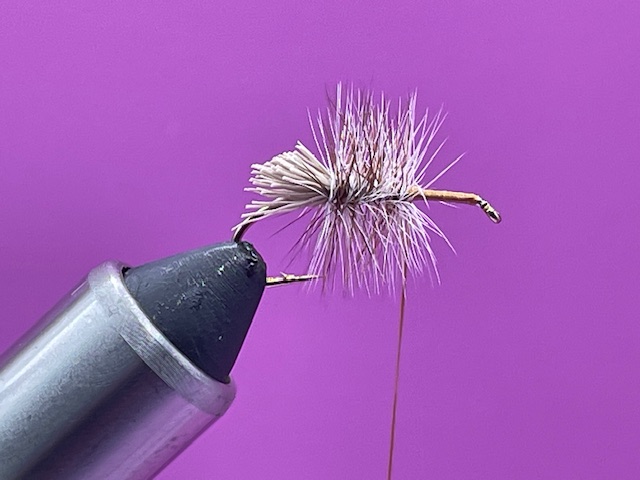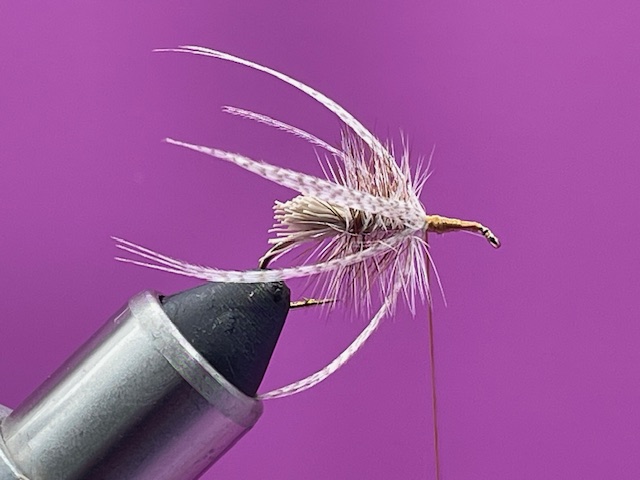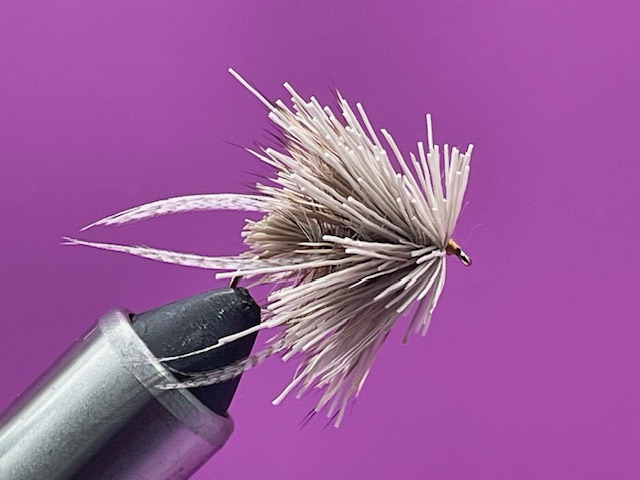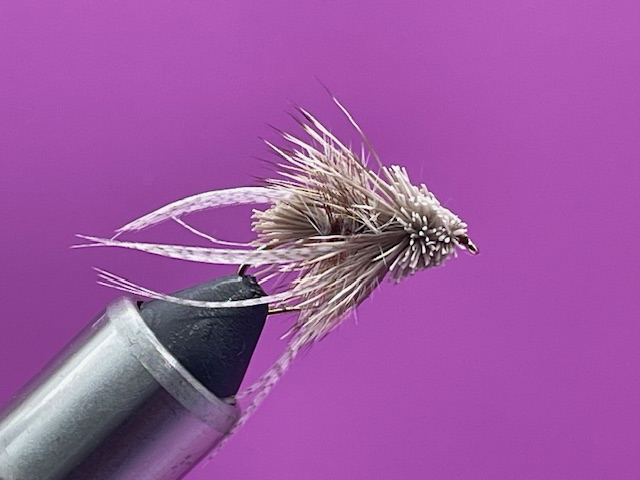
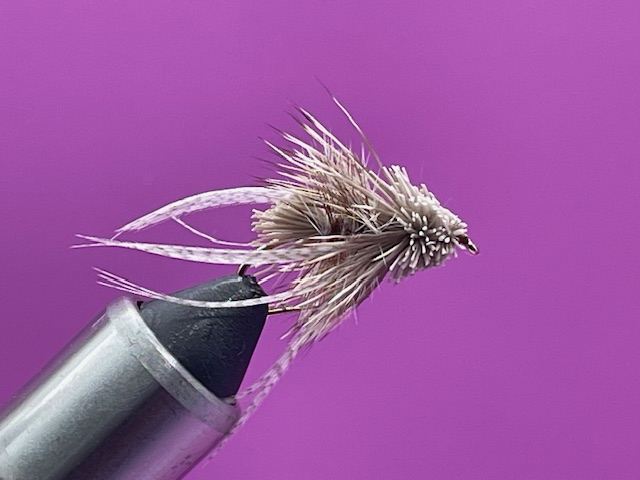
Bumble Muddler Variant
Some flies you see, and you just know they will work. That is how I felt the first time I saw a
Bumble Muddler Variant. My second thought was that I just wanted to keep saying its
name over and over and over.
I saw the Bumble Muddler Variant in the winter issue of Fly Tyer magazine 2025. It was in an
article by G.S. Scoville Jr., about Irish lough (lake) flies. It had a number of beautiful flies,
but the Bumble Muddler stood out immediately. I knew I wanted to tie it, but I couldn’t quite
figure what I would imitate with it. The Irish versions were meant to imitate large emerging
Mayflies, but I couldn’t see myself using it for that purpose. I sat on the idea for a few
months as I tied other Spring necessities that I knew I needed.
It was early in March when inspiration struck. My friends Bryan and Keith and I were
planning a late June trip to a local lake. We needed damsels and skating caddis. Since I
am the fly-tyer of the group they were giving me suggestions of flies they wanted. What
they wanted was size 10 Goddard caddis. I did not want to tie a dozen or more Goddard
caddis and “voila” it hit me. If I changed the tail of the Bumble Muddler it could easily
represent a caddis running across the water and I would only spin a small amount of deer
hair for each fly.
These caddis are different than their river cousins in that they don’t flutter, they run. Which
is why the Goddard is such a good imitation. I already have a great fluttering caddis
pattern, but I needed a runner. Insert the Bumble Muddler. I used a one size up hook to
make sure the hackles wouldn’t get in the way of the hook gap. It looks a bit strange to the
angler, but the fish don’t seem to mind and I am more confident in my hook sets. Also,
make sure and use stiff, one size small hackles. Remember, this caddis is not fluttering
with its wings out. It is running across the water on its legs with its wing folded down. The
soft hackle gives great subtle movement and the muddler head makes this fly easy to skate
across the surface. It may not be a traditional Irish variant, but I think it will be a fantastic
addition to my Montana lake fly arsenal. And that is what tying flies is all about. You take someone else’s great idea, or you just see something you like, and tweek it to fit your local bugs.
Hook: Size 8 2X long
Thread: Nymo size A tan
Tail: Natural elk
Body Hackle: One blond and one brown saddle hackles
Collar: Natural mallard
Head: Natural Deer body hair
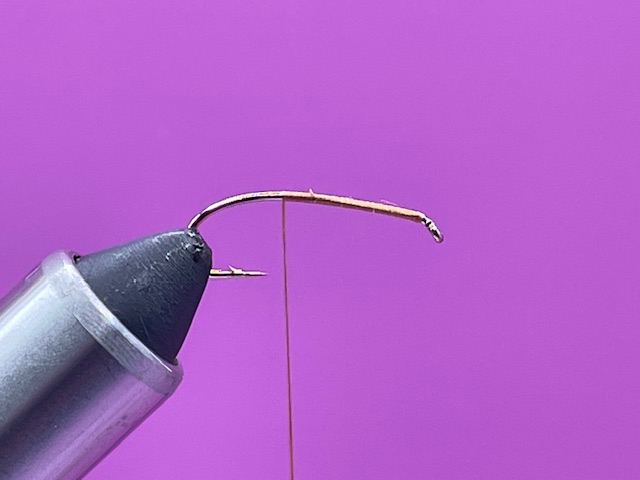
- Tie in the thread and wrap back about 2/3 of the shank. You want plenty of space for the hook to not get covered up by the hackle.
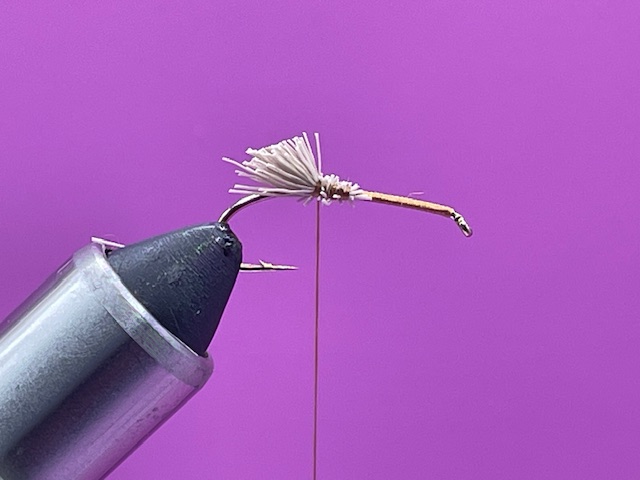
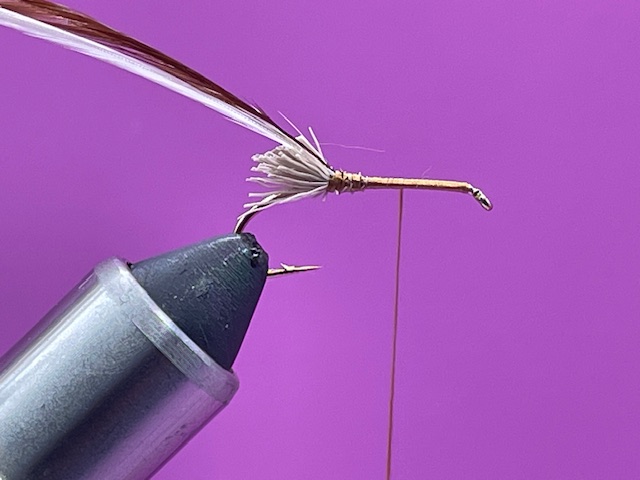
3. Tie in the two hackles shiny side forward and wrap the thread forward. I add a touch of glue to the thread to make the hackles a bit sturdier.