
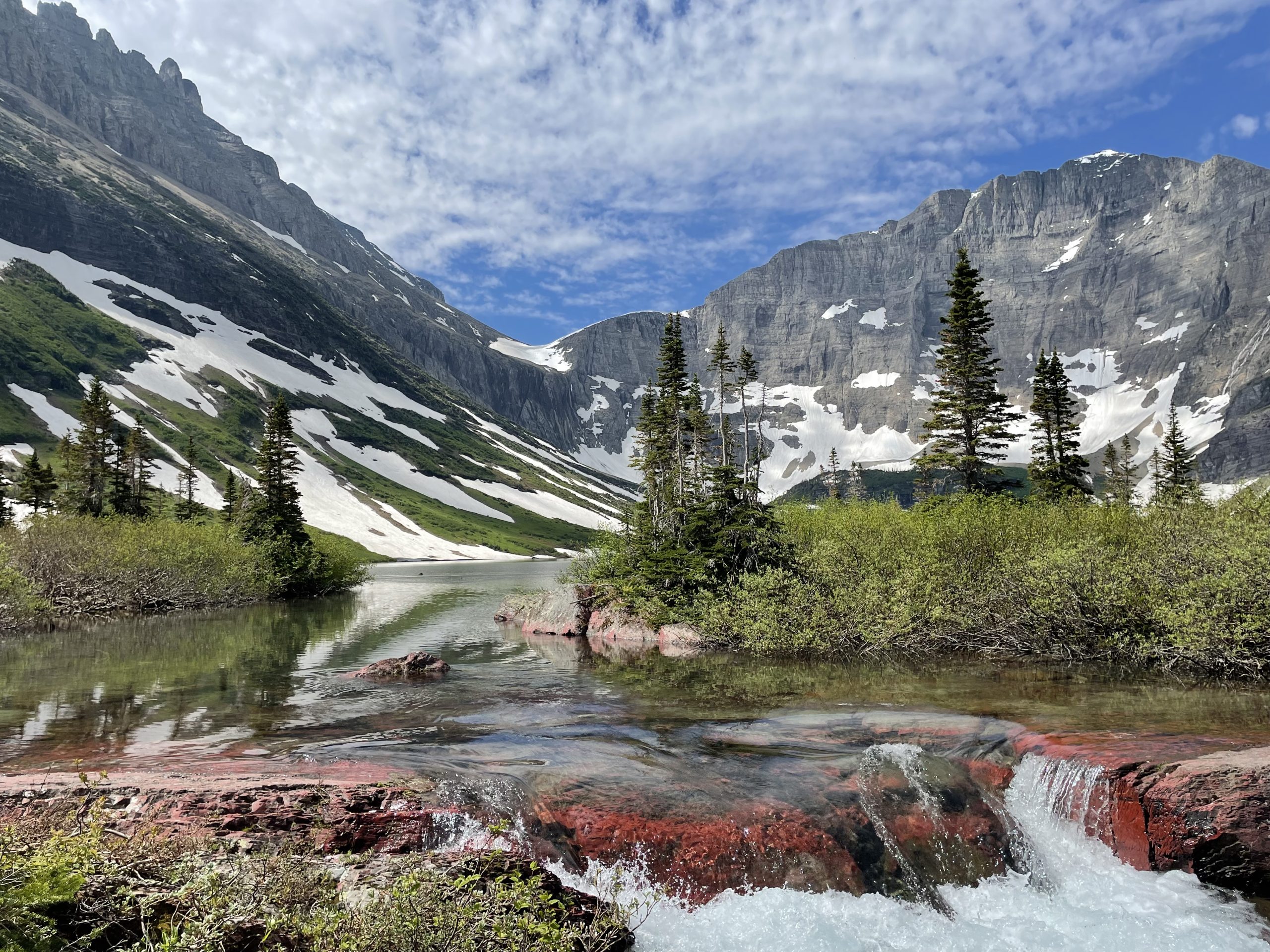
Ahh June, the baby geese are getting big and awkward, the mama deer look like they are ready
to pop, the turtles are back, lined up on the same logs as last year, and summer is finally here.
And, it’s forty-seven degrees out: it’s been raining for two days straight, and there are flood
warnings for our local rivers. Summer may be here, but enjoying it may take a bit of work right
now. Fortunately, there is always a way for those willing to try. The local lakes are about it for
fishing and they have lost their ice-off feeding frenzy. The fish are more spread out than they
were, but the weed-beds are coming in and that means the damselflies will soon be coming off.
Damselfly nymphs are around all year in various sizes, but come mid-June they are an inch long
and begin to hatch in earnest. On lakes that have extensive weed-beds this is the most
dependable hatch going. Fishing damselfly adults is one of the most exciting ways to fish. On
some days it seems like fish lose all of their normal caution and are cruising right on the surface
just waiting to pounce on the bright blue and green flies. Then, it’s a great time to be an osprey
or any other fish hunter. Most days though, the nymph is by far the more dependable producer.
They are easier to eat and unlike the adults that must fall or be blown into the water, they are all
there for the taking. On an ideal day, the damselfly hatch begins in the mid to late morning and
can last till early afternoon. The nymphs begin their migration from the weeds to wherever they
can find something sticking up above the surface to crawl out on and hatch into adults. Weeds, docks, stumps, legs, if you can hold still enough, or any other structure. They are slow, wiggly, s-shaped swimmers and the fish love them.
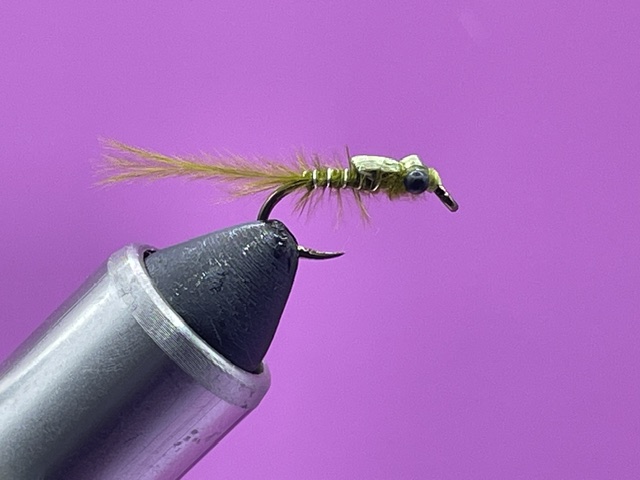
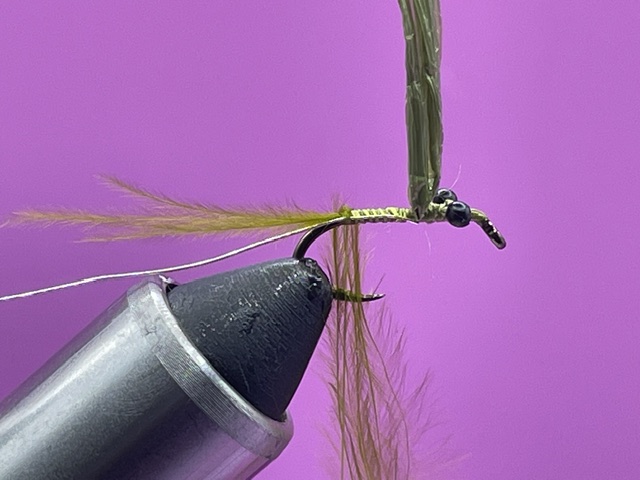
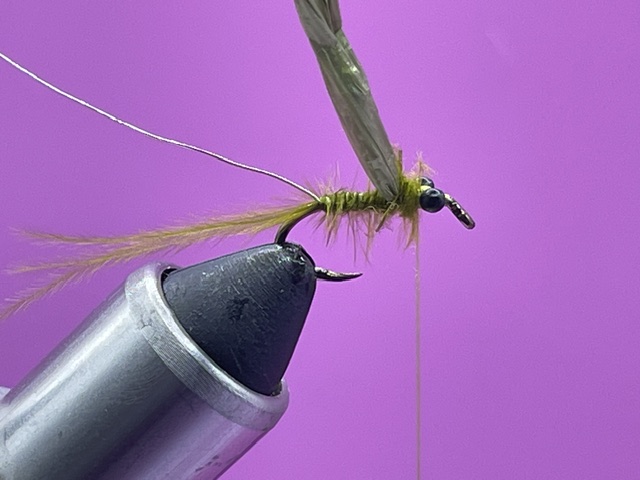
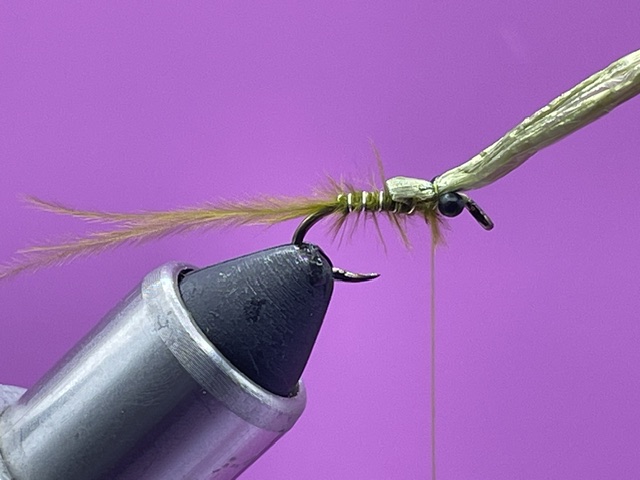
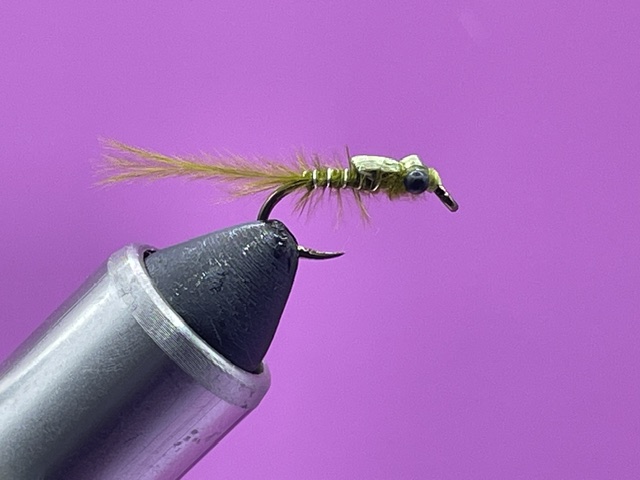
This damselfly nymph pattern follows the basic tenets of most of my flies, (and most other
fly-tyers as well). It is simple, it has natural movement, and it is at least close to the size and
color of the natural. As with any fly, there are various ways to alter this pattern to fit a particular
need. You can add some weight, in the form of a bead or underwire; you can change the color,
I’ve seen light tan through various shades of green; sometimes having a hot spot can help
differentiate your fly from the thousands of naturals out there. For this fly I sometimes use a red wire rib as my hotspot. Don’t forget to look at the actual real flies you have in the lake you are fishing. Then experiment and see what the fish want.
Good luck!
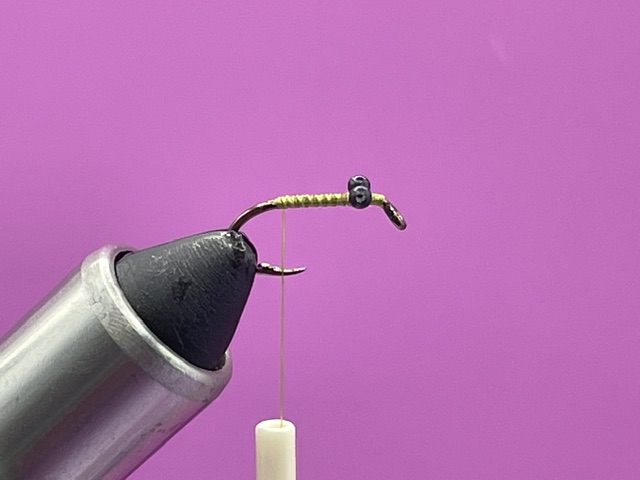
Materials
Hook: Eagleclaw Baitholder size 8
Thread: Veevus E18 8/0
Tail: Olive Marabou
Rib: Silver Ultrawire
Body: Olive Marabou
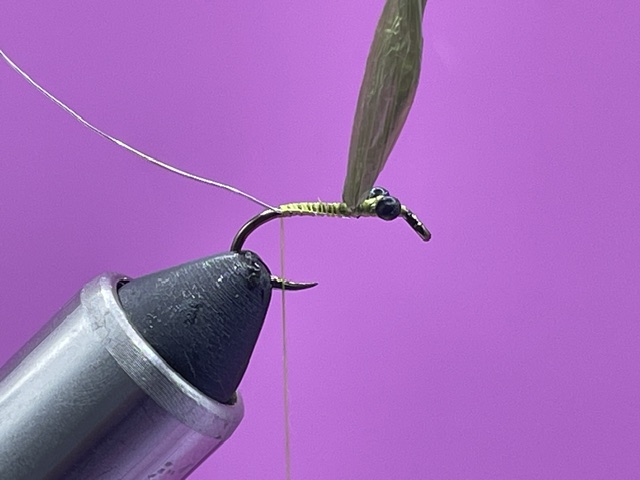
Thorax: Olive Marabou and Olive Swiss Straw (for the wingcase)
Eyes: Black Mono small
As always, experiment and have fun. You can reach me at: anglersvice406@gmail.com